
File under things that drive me crazy. Not everything some developer’s marketing team labels as “Main Line” today is actually the Main Line…nor does it have to be.
One of my favorite quotes about this appeared on Facebook recently:
Die hards stick to the Original Main Line. Realtors and blow in’s want everything within 40 miles called the Main Line.
The Main Line refers to the towns between Overbrook and Paoli as per the history of the Pennsylvania Railroad.
Malvern and Frazer are Chester County (for example) and should be delighted to be that. Realtors peddling new development are baptizing Malvern as Main Line the way they have already done with Chester Springs where they call what is actually Downingtown Chester Springs because they don’t think anyone would like living in Downingtown. Or saying Newtown Square is the Main Line also isn’t technically true. Newtown Square is Newtown Square and lovely in it’s own right.
Sad but true. Some even try to say Exton, Blue Bell, and Chester Springs are also the Main Line. Now hell, we know Chester Springs proper isn’t the Main Line every time when the nouveau Main Line heads west for Chester County Day and Chester Springs homes are on the tour (like last year) and folks don’t know how to drive (or park) on our roads or how to be polite in the houses…but I digress…
People. Learn your railroad history. It is how these towns were built.
The Philadelphia Main Line, known simply as the Main Line, is an informally delineated historical and socially pretentious and ridiculous region of suburban Philadelphia, as freaking created by old railroad lines. These towns became more cohesive along the Pennsylvania Railroad’s once prestigious “Main Line”, which ran northwest from Center City Philadelphia parallel to Route 30 (Lancaster Ave to some Lancaster Pike to some Lincoln Highway to others.)
The railroad first connected Philadelphia to the Main Line towns in the 19th century.
They became home to sprawling country estates and hotels belonging to Philadelphia’s wealthiest families, and over the decades became a bastion of “old money”. People built their summer homes out here at that point. In the 18th century wealthy Philadelphians summered in places like Fairmount Park. In the 19th century the railroads moved them further west.
Seriously, don’t forget there were grand hotels too. One is what is now the Baldwin School was once the Bryn Mawr Hotel. As per Baldwin:
 After the Civil War, Bryn Mawr was a popular spot for Philadelphians to come to escape the summer heat. Of the many hotels and boarding houses in Bryn Mawr, the one that aided most in its development was the Bryn Mawr Hotel or Keystone Hotel, as it was also known, built in 1871. This grand summer resort was constructed by the Pennsylvania Railroad, and was located in the countryside just north of the station. The four-story masonry building was designed by Joseph Miller Wilson. The hotel had 350 rooms, a fashionable polychromatic slate mansard roof, and an enormous veranda. The hotel’s amenities included: gas lights, bath tubs, the first elevator on the main line, a “ten-pin alley”, first quality mattresses and one bathroom on every floor. This splendor was destroyed by a disastrous fire which broke out in October 11, 1887 at 6:30 a.m. Most of the building was destroyed by the time Philadelphia fire engines arrived by railroad gondola car.
A second Bryn Mawr Hotel was built on the site in 1890 by a neighborhood syndicate. This new, four-story, granite structure was designed by acclaimed architect Frank Furness, of Furness, Evans & Co. The Hotel was inspired by the Chateau de Pierrefonds, a 16th century French chateau, and contained the latest technologies, including steam heat and electric light. From 1896 to 1913 the hotel hosted its own annual horse show that drew high society Philadelphians. The new Furness designed building cost the promoters half a million dollars. Half of this amount was obtained by sale of stock and half through the sales of bonds. The stock never paid a cent of dividend, and when the bonds finally came due, the group could not pay the interest. The mortgage was foreclosed and with this, the hotel stopped operations. Later the building was bought by the Baldwin School for Girls.
Read the 1891 article from The Illustrated American about the Bryn Mawr Hotel
The Main Line has this fabled history. I lived there until a few years ago. My parents moved us there when I was about 12. So yeah, I know the history. In some regards I think I lived there in the sunset of it’s greatness. The Main Line as it exists today I find distasteful and gauche sometimes because well, the nouveau Main Line neither gets nor appreciates nor really cares about the actual history.
Until the railroads, the Main Line was a lot of country. Farms, quarries, mills, even factories. It became genteel versus rural/copuntry living by it’s very history. The Pennsylvania Railroad and 19th century real estate developers and speculators truthfully get the credit here.
Like Wayne, PA which was essentially a developer planned community of it’s day. Don’t believe me? Visit the Radnor Historical Society Website. Here is a photo of a real estate brochure they have on their website from when Wayne was being developed:

Courtesy Radnor Historical Society
People just don’t know the history any longer. Like this ad also courtesy of the Radnor Historical Society:
There were SO many hotels up and down the Main Line of the Pennsylvania Railroad.
Like the Bellevue Hotel which burned to the ground in 1900:
Or…
One of my favorites which no longer exists? The Devon Inn.
The Devon Inn is (I think) where part of Valley Forge Military Academy now exists.
Your Town and My Town Archives Courtesy of Radnor Historical Society
Devon Inn, Bryn Mawr Hotel, Valley Forge Military Academy
SEPTEMBER 10, 1954 / EMMA C. PATTERSON
….So it was with Devon Inn, a brief history of which was given in the series on large fires which have occurred in this vicinity in past years. In the early morning hours of January 18, 1929, this famous Main Line hostelry burned to the ground. The pictures illustrating today’s column show two views of the Inn as it appeared in its heyday. They were sent to your columnist by James L. Kercher, of Conestoga road, soon after the story of the fire appeared in “Your Town and My Town” in the spring of 1952. The reverse side of this picture postcard of the Devon Inn describes it as the “social center or the Main Line,” located in “beautiful Chester Valley” and “open from May to December.”
….Among its attractions they list the Devon Horse Show, polo matches, kennel show, Rose Tree Horse Show, Belmont trotting event, Chesterbrook races, Bryn Mawr Horse Show and Devon fancy cattle show. And these are not all, for the list continues with the Horse Show Ball, Spring flower show, golf and tennis, private theatricals, Bal Masque, Autumn flower show, auto exhibition, the County Ball and Devon Inn’s beautiful Japanese Floral Cafe. This cafe was evidently located on one of the Inn’s wide porches…The history of this old inn is an interesting one. The original structure, called the Devon Park Hotel, had been built in 1876 to house the overflow of visitors to the Centennial Exposition in Philadelphia. Three years later, fire destroyed the first building, but it was replaced soon after by a larger and more ornate structure, erected on the same site. This is the one shown in today’s picture.
For some years there was great rivalry between the Devon Inn and the Bryn Mawr Hotel for the patronage of fashionable Philadelphia summer boarders. Located on the site of what is now the Baldwin School, the Bryn Mawr Hotel was owned by the Pennsylvania Railroad. This rivalry ended in a complete victory for the Devon Inn, when the Devon Horse Show made its initial bow. The show immediately became a nationally famous event, with entries and visitors from all over the United States. The socially elite from New York and the Long Island Colony, from Boston, Chicago and many other cities throughout the country filled the Devon hostelry to capacity each horse show season.
When the Bryn Mawr Hotel burned to the ground, the Devon Inn lost its only serious rival….
Most people don’t even remember there was ever a Devon Inn, which is why my friend Michael Morrison’s lecture at Jenkins Arboretum a couple of years ago was so popular.

Image from Tredyffrin Easttown Historical Society
When this topic of what the Main Line actually is and what the actual historical boundaries are crops up on social media, someone always leaves a conversation feeling offended.
Sorry not sorry but Malvern isn’t and never will be the Main Line. As I have said before, it’s Chester County and everyone in the Malvern area should be ok with it as Malvern already has a wonderful identity and history.
There is this booklet called Plan The Keystone which has a lot of great history in it (05.30.19 – Booklet – History of Paoli Station):

But marketing being the illusion maker that it is creeps in even in the 1963 Franklin Survey Company publication:
Duffy Real Estate actually has a quirky but fairly accurate Main Line History page:
In 1828, the Pennsylvania legislature authorized the construction of the railroad between Philadelphia and Pittsburgh. This was known as the “Main Line” of the Public Works system. This, in turn, caused the development of the surrounding area.
After the Civil War, track improvements were sought and new station houses were erected to include more stops along the line. In recognition of the heritage of the areas along the rail line, many stations were given English and Welsh names, such as Narberth, Ardmore and Bryn Mawr.
Many changes were made to the rail route and so the Commonwealth purchased lots surrounding the rail line with stipulations on setbacks and improvements to the land next to the station houses. In Bryn Mawr, it stated that the building of “hotels, taverns, drinking saloons, blacksmiths, carpenter or wheelwright shops, steam mills, tanneries, slaughterhouses, skindressing establishments, livery stables, glue, candle or starch manufactories, or other buildings of offensive occupation” was prohibited.
The result was “a complete picture of suburban comfort and elegance with wide avenues and roomy and open ornamental grounds, spacious lots for building and homes of more than ordinary architectural tastes.” These new homes served as the summer residences for many affluent families. The Main Line was now established.
The Pennsylvania Railroad promoted this area in brochures describing the “opportunities provided by the railroad for ‘summer sojourns’ away from the city and the desirability and convenience of suburban living.”
When we were growing up there was this little thing we did to remember the order of the train stations. Old Maids Never Wed And Have Babies. Overbrook, Merion, Narberth, Wynnewood, Ardmore, Haverford, Bryn Mawr. You can find this mentioned here on this blog which I find amusing because they say they think the ditty ends with Bryn Mawr Station because it was thought of possibly by a Bryn Mawr College girl. This blog is called Philadelphia Reflections and I love it because they write about the most interesting stuff!
 One of my dear friend’s grandfathers was an executive with the Pennsylvania Railroad. He moved his family from the city to Haverford near Merion Cricket Club. The road they settled on had several homes built as a direct result of the railroad. Like many of the homes in Wayne, it was desirable because one could walk to the train station.
Growing up, we never thought the Main Line was one centimeter past Paoli…because we knew the history. Today it’s like saying you are from Greenwich, Connecticut or similarly affluent and storied suburbs. Or even what defines Manhattan, versus living in the other boroughs of New York City but saying you live in Manhattan.
Pennsylvania Center for the Book: Philadelphia’s Main Line: It’s Not Just a Place – It’s a Lifestyle By Casey Murray, Spring 2014
The mansion stood at the end of a half-mile long drive, in the midst of 750 acres. The estate was magnificent, to say the least. It had been erected in 1911, in the style of the Georgian Revival, and was crafted by the prolific architect Horace Trumbauer – designer of the Philadelphia Museum of Art, the Duke University Chapel, and the main Harvard University Library, to name just a few. The façade of the manor was classic “old money” – adorned with brick, accented with ornate cream molding, and finished with large traditional sash windows….Too good to be true? A fairytale perhaps? Surely, a scene from a movie? Well, yes… and no. Because not even MGM, the esteemed motion picture conglomerate, would believe it. The mansion, Villanova’s Ardrossan estate, was the inspiration for 1940s The Philadelphia Story, and has since been dubbed by the Philadelphia Inquirer a “house so grand, even Tinseltown had to tone it down.” The house in question, however, is very much real, as is the lifestyle that comes with it.
But Ardrossan is only one small portion of the prestigious and affluent area known as the Main Line. Situated just west of Philadelphia, it is comprised of the seventeen different towns in Montgomery, Delaware, and Chester counties – each of which is connected by the railroad, and the area’s namesake, the Main Line…..These estates and their residents have come to define the Main Line. But what does that mean? With the birth of the Main Line in the late 1800s, there also came “an extreme type of class-consciousness. The flood of wealth that created American family fortunes in the late 19th century settled around a handful of cities and was expressed in different forms of conspicuous consumption and elaborate social behaviour,” writes Ian Irvine in the Sunday Telegraph. Irvine compares Manhattan’s Upper West Side to Philadelphia’s Main Line to call attention to the grandeur associated with the area; but that’s where the similarities end. “In more traditional… Philadelphia, however, society turned almost feudal, almost English in its attitudes – ‘old’ money and ‘old’ families counted for everything. The very term WASP (White Anglo-Saxon Protestant) was coined to describe members of Philadelphia society,” a term popularized by University of Pennsylvania professor E. Digby Baltzell. And an appropriate term it was….Nowadays not every Main Liner may live like a Scott, but the expectation to act like one endures. As Betty Feeney and Julia Lorenz Gaskill noted in 1955: “the Main Line is a way of life which both its natives and newcomers tend to view as the best this side of Paradise.”
The lure of the Main Line as well as the lore of the Main Line. I still find it crazy. And I for all intents and purposes grew up there. It’s only the Magic Kingdom if you can really afford it and I often wonder how many can actually afford it versus the great pretenders? I lived there for so long because it was where I called home from the age of 12 into my 40s. And yes, I always knew I would probably eventually leave not for anything else than it keeps getting more expensive and if you are realistic you have to ask is the Main Line really worth it?
Back to history, this time courtesy of the Lower Merion Historical Society:
The Philadelphia & Columbia Railway
A Ride on The Main Line. The War of 1812 had ended and the country was expanding by extending its borders westward. New York, Baltimore and Philadelphia were the major seaports which stood to benefit the most in trade to the west. The road system could not handle the increased traffic so we entered into the age of canals, which offered faster service and were cheaper to operate.
New York built the Erie Canal which joined the Hudson River with Lake Erie, thus providing a through waterway from New York City to the Great Lakes. The Erie Canal opened in 1825.
Maryland, replacing their National Road, began the construction of the Chesapeake and Ohio Canal which connected Baltimore with the Ohio River.
As a counter measure, Pennsylvania decided that it wanted to develop its own canal system linking Philadelphia to the frontier city of Pittsburgh and authorized its construction. But when the survey was made, it was found that there was not enough water in the right places for a canal between the Delaware and the Susquehanna Rivers.
In March 1823, the Pennsylvania State Legislature issued a charter for the first railroad in the state. It authorized the construction of an 82 mile railway, from Philadelphia through Lancaster, terminating at Columbia (on the Susquehanna River), as part of the “Main Line of Public Works of the State of Pennsylvania.” The nickname, “The Main Line,” derived from this early Pennsylvania railroad…A Government Venture. The Philadelphia & Columbia Railway was one of the earliest railroads in America and the first in the world to be built by a government rather than by private enterprise. The contracts for the work were granted by the Canal Commission, under whose supervision the line was operated. Considered a public toll road, individuals and companies paid tolls to the Commission for use of the rails. They also supplied their own horses, rolling stock and passenger or freight facilities.
The Philadelphia & Columbia Railway finally became operational on September 1832, with carts and wagons dragged by horse power on a 20-mile section which began in Philadelphia (at Broad and Vine Streets) and ended at Green Tree Inn, west of Paoli….More than any other person or entity, it was the Pennsylvania Railroad that built the Main Line. For 111 years, its trains linked Lower Merion with Philadelphia and the nation. Even today, three decades after the railroad merged with a rival, the Pennsylvania’s legacy continues to shape life in the township.
The Pennsylvania Railroad began its long association with the Main Line when it purchased the Philadelphia & Columbia Railroad from the state in 1857. At that time, there were only three stops in Lower Merion: Libertyville (serving modern Narberth and Wynnewood), Athensville (now Ardmore) and White Hall (Bryn Mawr). For a little over a decade, the Pennsylvania concentrated on rebuilding the line and developing long distance traffic. As late as 1869, the railroad operated only a handful of local trains along the Main Line.
So…look at the dates referenced by The Lower Merion Historical Society. 1832. Duffy’s Cut anyone? (Duffy’s Cut is the name given to a stretch of railroad tracks about 30 miles west of Philadelphia, United States, originally built for the Philadelphia and Columbia Railroad in the summer and fall of 1832. The line later became part of the Pennsylvania Railroad’s Main Line. Railroad contractor Philip Duffy hired 57 Irish immigrants to lay this line through the area’s densely wooded hills and ravines. The workers came to Philadelphia from the Ulster counties of Donegal, Tyrone and Derry to work in Pennsylvania’s nascent railroad industry. They were murdered.)
And just so we are clear, I am not some old Main Line trust fund baby. We lived there because my parents decided to move us there as we got older for access to better schools and a way of life that included being able to play outside whenever we wanted. However, where I grew up was close to where one of my great-grandmothers was in service. Rebecca Nesbitt Gallen. She was a summer housekeeper for the Cassatt family (think Merion Cricket Club) at their Cheswold Estate. Of course Alexander Cassatt was also famous for his Chesterbrook Farm in Berwyn. We of course know Chesterbrook today as the giant development that popped the cherry of suburban density development. It’s hard to believe that Chesterbrook today was once a glorious 600+ acre farm, right?

Photo source: Pinterest
And yes, Chesterbrook Farm was in Berwyn…yet Chesterbrook the development today has a Wayne post office zip code. Yup even Chesterbrook wasn’t o.k. where it really was, was it?
Technically Chesterbrook although it has a Wayne post office zip code isn’t Main Line. In my opinion, it probably got the Wayne zip code to make it marketable as Main Line when the development was built. The fight over the Chesterbrook Development went all the way to the Pennsylvania State Supreme Court. Chesterbrook is I think actually over 800 acres if you count the other land parcels that went into it. I still view it as planned development at it’s worst. My late mother in law was one of the many, many residents who fought it for years.
(From Lower Merion Historical Society) Chesterbrook retells the story of Wayne for the 20th century
Finding homes for people drawn here by technology isn’t anything new
By David Schmidt
Special to Main Line Life
The more things change, the more they stay the same. That could apply directly to two very dissimilar areas of Radnor today. But each was a result of technology creating a need and ambitious men filling it. Although they don’t look the same at all, each was its century’s response to changes caused by technology.
In the late 19th century, the railroad had opened up the western suburbs for white-collar workers who wanted to escape the filth and disease of the city. It’s almost impossible today to imaging just how dangerous it was living in a large city and that didn’t even include crime.
Infant mortality was rife, and often mothers died in childbirth or from infections afterwards. Influenza today dreaded mostly for its discomfort killed tens of thousands each year. Men died young, maimed and broken in brutal factories. Everything was dirty, both from the coal smoke that permeated every space and from the animals which were ubiquitous.
But the trains made it possible for people to live and work in different places. After the railroad barons moved themselves along the Main Line, building monstrous estates, it was time for the middle class. The first development in Radnor designed to bring folks from the city was a 300-acre estate belonging to J. Henry Askins. Called Louella Farms, it was named after his two daughters, Louise and Ella.
In 1869 he began building houses some of which remain on Bloomingdale Ave. in Wayne clearly designed for middle-class families. But he was really too early, although he did create a community of sorts. The farm lay alongside the Main Line tracks. His mansion, also called Louella is now the Louella Apartments.
This was the center for further development in what would become Wayne. Askins liked the feudal nature of his “community” and encouraged development of other facilities south of Louella and the train tracks. This resulted in the Presbyterian Church, the Opera House and the Post Office, all built between 1870 and 1874….
A century later, transportation technology did it all over again. In the mid-1960s the state announced that it was turning Rt. 202, a two-lane highway running south from King of Prussia into a limited access four-lane highway. Radnor officials knew that meant urban sprawl was coming to Philadelphia’s far suburbs….The Fox Companies didn’t build everything, but they developed and controlled it. “The scale was large enough for two or more companies for construction and retailing,” he says. “Part of what we wanted to do was create a community with a physical and social sense, and landscaping is very important for that…..The original idea was to have a mix of housings. “We wanted teachers and cops to be able to afford to live here, for instance,” he says. “Unfortunately the economic realities of what happened to housing prices in the 1970s defeated that.” There are still different styles and price ranges grouped together, so that the 2700 units seems more to be clumps of housing.
As part of a plan to help control the tide of growth Radnor created a unified development area on a 1000-acre plot alongside the highway. This meant that the rules as to density of population and other zoning and regulatory issues would be worked to encourage controlled development. The Fox Companies, headed by Dick Fox, bought up most of the land and although there were several parcels of land, by far the largest was Alexander Cassatt’s “country place,”Chesterbrook. Farm” He named the development for Cassatt’s farm.
Chesterbrook is a mixed development, with office buildings, several types and styles of houses and townhouses and open spaces.”Issues such as schools, open space, traffic and roads were defined to help counter urban sprawl,” according to Jim Hovey, president of The Fox Companies. “Cassatt’s farm was owned by a company owned by Bill Levitt, Jr. son of the creator of Levittown. The Fox Companies were able to acquire three of the four packages of land.
Yeah, I know this has been quite the ramble. But I just don’t think Chester County needs to be completely annexed to the freaking Main Line. It’s preposterous. Stick to the history. It tells you the boundaries. And yes, there are several towns (and townships) that have parts of themselves which are part of the Main Line historically, although not in their entirety. Like parts of Chester County. Chester County has a rich history that is far more interesting than the mere history of the Main Line which was created by the railroads.
I will close with this funny as hell map of the Main Line I found on Pinterest. It is by a local artist and graphic designer named Barb Chotiner. She lives in Narberth…which is another place with it’s own unique and lovely history, yet it is part of the Main Line by history.
Thanks for stopping by….writing today as always from beautiful Chester County, PA. (NOT the Main Line.)
Like this:
Like Loading...


 On this day, for the first time I saw Willowbrook Farm, which most of you know as Life’s Patina. At this point in 2012, the barn where so many go to enjoy special events and charity shopping days was being restored. I had not even met Meg Veno yet.
 I fell in love with this farm on that day many years ago.
 The care, the love, the attention to detail. And I have loved all of my many subsequent visits ever since.


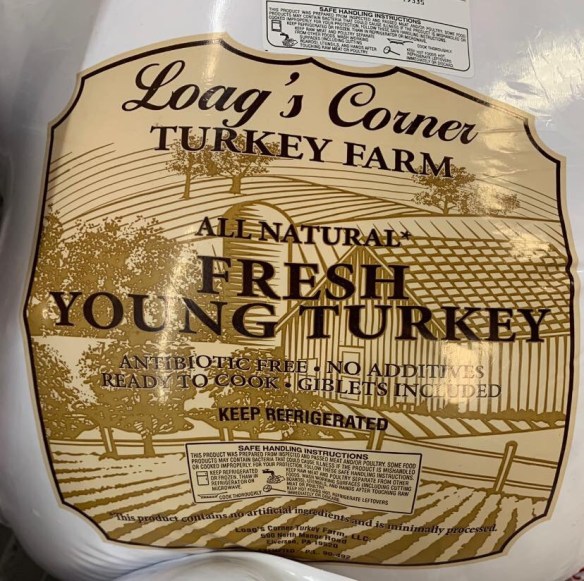 If you are local, Loag’s turkeys can also be purchased through local butcher shops like


 I have been told that these properties are NOT being razed they are being preserved.


 I have run into these situations before as I have another friend who actually has had “photographers” doing photo shoots on her property without permission. Photo shoots of entire families who were complete strangers to my friends. These people would drive up park on their property and stage these photo shoots in front of their fields and barn.
 I have another friend who has a small farm who told me today that they have discovered people parking and hanging out in their back fields before who are total strangers. These people didn’t ask permission and that’s not OK.


 In this particular land of Stepford, you also don’t garden.


